
Verbinden
Connect

Bittensor Community

Take TAO beyond subnet speculation into broader capital flow

Rujira gives Bittensor users a cleaner route into trading, recurring swaps, collateral, and broader market structure without losing sight of TAO's role in open AI-native markets.

How do you want to use your TAO?

Choose the path that fits whether you want cleaner execution, recurring accumulation, or more flexible TAO-backed liquidity.

Bittensor On Rujira

Keep the AI-market thesis, but widen the financial path

Bittensor users are used to thinking in terms of subnets, emissions, and network incentives. Rujira complements that mindset by giving TAO a broader wallet-first market path through trading, swaps, borrowing, liquidation flow, and optional privacy.

Bittensor product paths

RUJI Trade

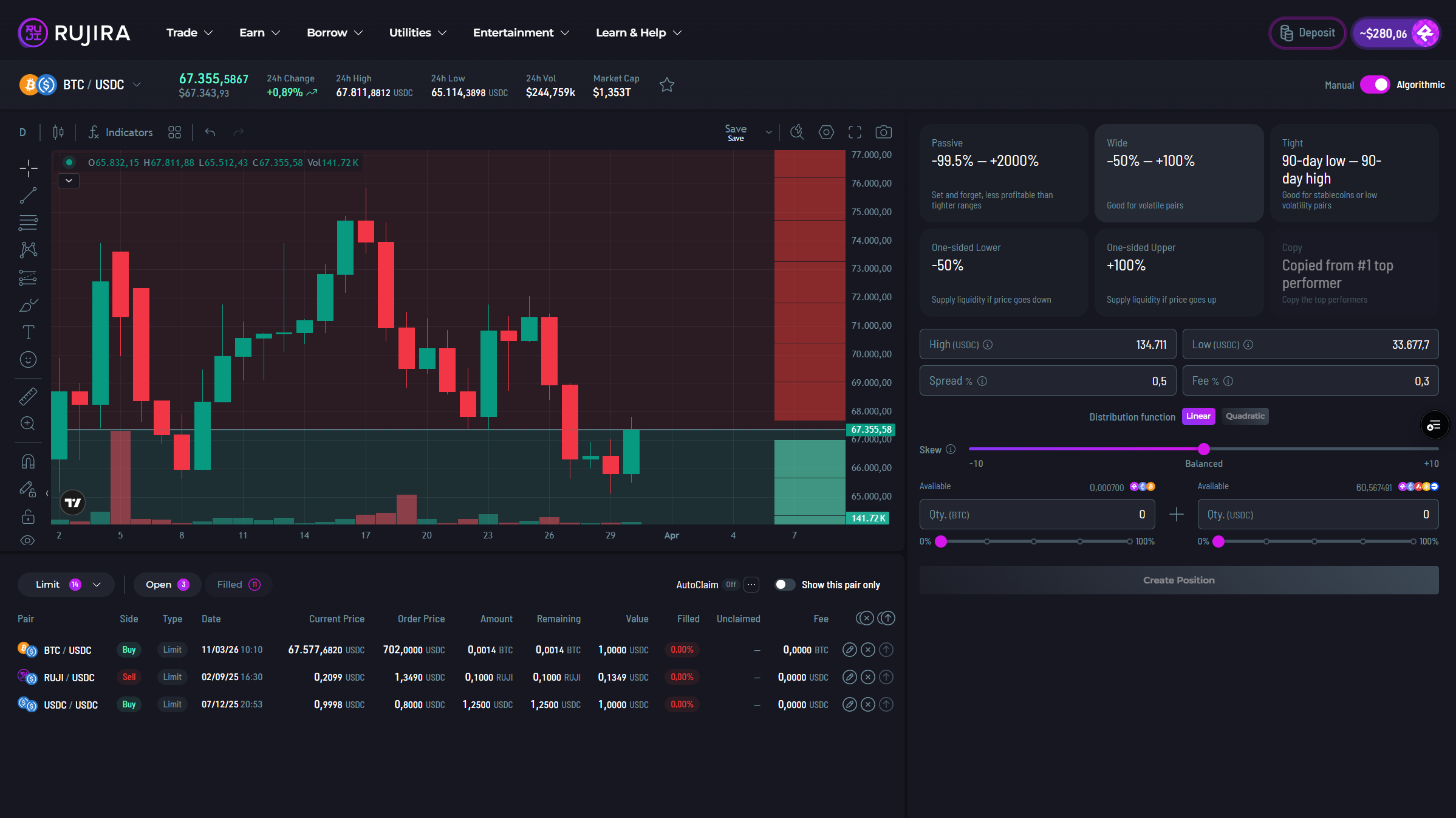
Trade TAO through a clearer market structure

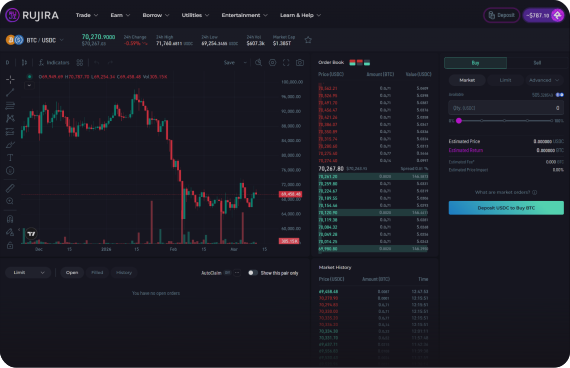
RUJI Trade gives Bittensor users a clearer orderbook route when they want more structure around TAO execution. It keeps the workflow wallet-first while connecting TAO to the same broader market stack that powers the rest of Rujira.

  • Use market, limit, tracking, and recurring orders when more control matters.
  • Keep TAO in a wallet-first route instead of defaulting back to custodial balances.
  • Stay connected to the same broader market stack that supports swaps, automation, and borrowing.
RUJI AMM

Put TAO to work through automated liquidity

RUJI AMM gives Bittensor users a way to place TAO inside active market flow instead of leaving it as passive directional exposure. That matters when volatility is high and you want capital to do more than wait.

  • Turn TAO into active market capital instead of leaving it idle.
  • Use presets when you want a simpler starting point or tighter ranges when you want more control.
  • Keep the capital route tied to the same trading system used elsewhere on Rujira.

RUJI Swap

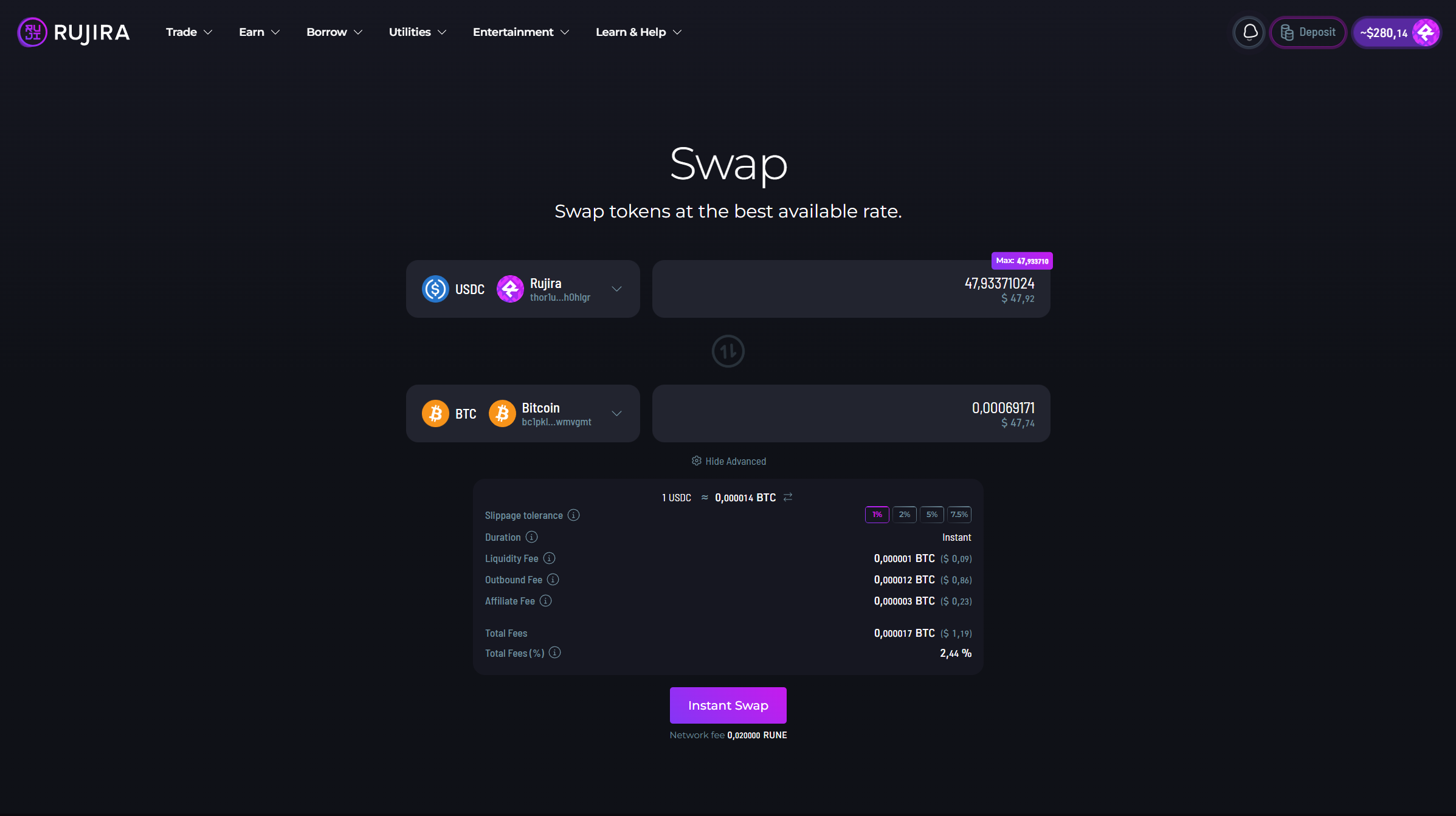
Use RUJI Swap to move around TAO more cleanly

RUJI Swap gives Bittensor users a cleaner route into or out of TAO when conditions change across AI-related markets. Recurring orders are especially helpful when you want steadier accumulation or staged exits instead of one oversized move.

  • Swap TAO against major assets from the same connected market system.
  • Use recurring orders when you want a steadier path into or out of exposure.
  • Let routing handle the path instead of manually piecing together every move.

RUJI Money Market

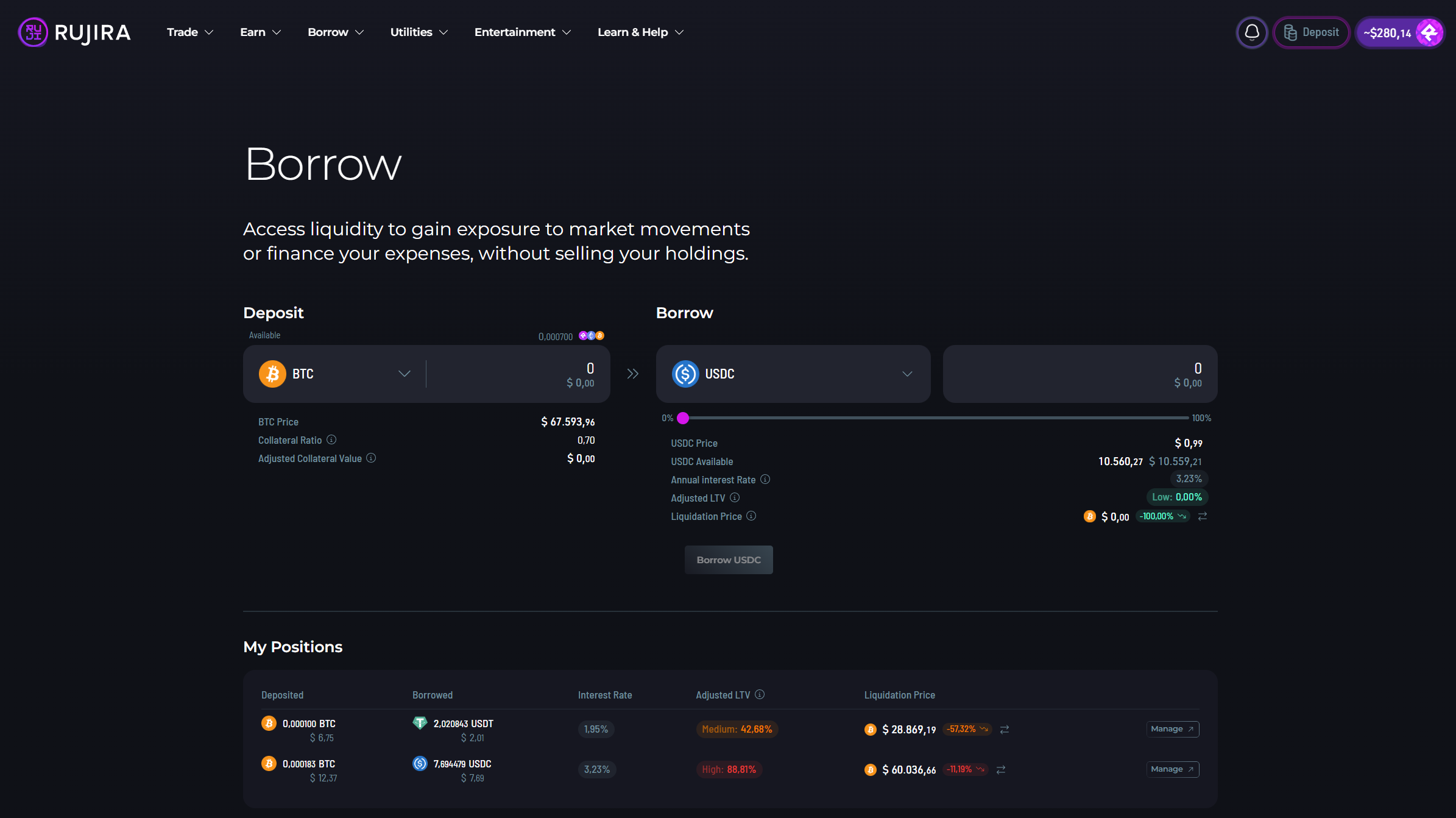
Keep TAO exposure while unlocking flexibility

RUJI Money Market helps Bittensor users treat TAO as more flexible capital. You can keep the asset in play as collateral and access liquidity when selling is not the best path.

  • Use TAO as collateral while keeping exposure to the asset itself.
  • Borrow liquidity when flexibility matters more than a full exit.
  • Keep borrowing tied to the same pricing and market stack used across Rujira.

RUJI Liquidations

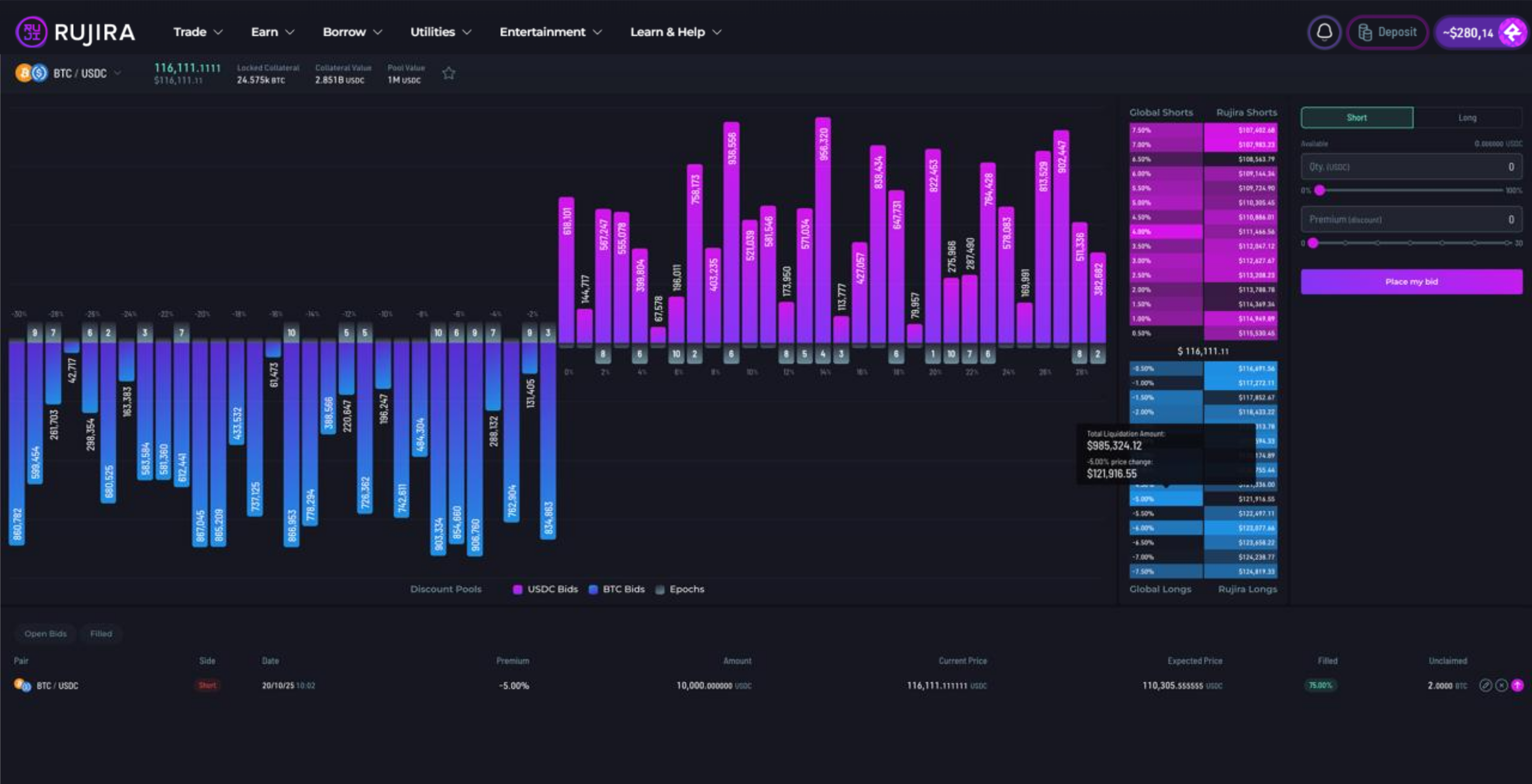
Follow liquidation flow tied to TAO markets

RUJI Liquidations gives Bittensor users a public view into distressed collateral and discounted bidding opportunities. It is useful when you want more price discovery and less pure speed competition.

  • Watch TAO-related liquidation flow through a public interface.
  • Bid on discounted collateral through a more transparent auction process.
  • Use the added context to decide whether a liquidation entry fits your plan.

Redacted Privacy Layer

Use an optional privacy layer alongside TAO activity

Some Bittensor users want selected actions to stay more discreet without losing the openness of the broader system. Redacted adds that extra layer when it matters while keeping the rest of the workflow connected.

  • Keep privacy optional and product-scoped.
  • Move between normal and private routes based on the task at hand.
  • Add discretion without losing access to the broader connected stack.

Secured Assets

How Secured Assets help TAO move through Rujira

Secured Assets let native TAO move through RUJI Trade, RUJI Swap, RUJI AMM, and RUJI Money Market without falling back to the usual wrapped-asset bridge assumptions.

Illustration showing how native TAO can move across Rujira products through Secured Assets.

Bittensor On Rujira

Why Bittensor users can find Rujira useful

TAO already sits inside an incentive-rich network. Rujira matters when Bittensor users want cleaner market structure and more flexible capital movement around that exposure.

Keep TAO in focus

TAO stays the working asset instead of being reduced to a side position on disconnected venues.

Stay close to network-native control

The route remains wallet-first, which fits a community that values open participation and self-direction.

Connect TAO to broader markets

Trading, swaps, collateral, and liquidation flow can work together instead of staying trapped in exchange-only habits.

Make TAO more flexible capital

Rujira helps TAO do more than express one market view by turning it into a broader working asset.

New to Bittensor?

Learn what makes Bittensor unique

Chain fundamentals and live market data, all in one place.

Bittensor

TAO#35 by market cap

A decentralized network for AI-native digital commodities where TAO coordinates incentives across subnets.

Public launch
2023
Max supply
21M TAO
Network model
Subnets
Core actors
Miners + validators

Origin

Built by
Open-source Bittensor community
Mainnet launch
2023
Secured by
Validators and subnet incentives

Ecosystem

Core lanes
AI inference, training, data, and compute subnets
Rujira role
Trading, swaps, collateral, money markets
Core values
  • Open markets
  • AI subnets
  • Network incentives

Live tokenomics

Bittensor price (USD)

$313.11

+2.0% (24h)

24H high
$328.88
24H low
$309.25
Buy TAO
Market cap
$3.00B
24H volume
$273.17M
Circulating supply
9.60M TAO
Max supply
21M TAO
All-time high
$757.60
ATH date
Mar 2024

FAQ

Questions and Answers

Common questions about using Bittensor on Rujira.

Ontdek Meer

Begrijp hoe alles samenhangt

Duik dieper in Rujira. Leer hoe de architectuur werkt, verken het ecosysteem en vind gidsen en antwoorden in het Supportcentrum.

Or look for the full overview in our Support and Learn section.

Ga naar Support